
One of my favorite parts of teaching preschool was creating bulletin boards that celebrated what my students were learning. For me, bulletin boards were never just decorations—they were an extension of our classroom.
Every display told the story of our learning. Whether we were reading a favorite children’s book, exploring a science concept, practicing math skills, or talking about emotions, our bulletin boards showcased student work, encouraged meaningful conversations, and helped children revisit what they had learned.
Every bulletin board featured in this post was designed and created with my preschool students. These displays aren’t just ideas—they’re real classroom projects that inspired meaningful conversations, creativity, and hands-on learning.
If you’re looking for preschool bulletin board ideas that do more than decorate your classroom, I hope these displays inspire you to create learning spaces that celebrate your students and the amazing work they do every day.
In This Post, You’ll Discover
- Book-inspired preschool bulletin board ideas
- Interactive classroom displays that celebrate student learning
- Easy ways to connect bulletin boards to children’s literature
- Tips for creating meaningful displays with student work
- 10 real bulletin boards I created with my preschool students
Bulletin Board #1: The Very Hungry Caterpillar

Inspired by Eric Carle’s beloved story The Very Hungry Caterpillar, this preschool bulletin board idea became one of my favorite bulletin boards because it combined children’s literature, student artwork, and meaningful classroom discussions into one interactive display. After reading the book together, my students created artwork inspired by the caterpillar’s journey while practicing sequencing, retelling, vocabulary, and oral language skills.
Instead of creating a bulletin board that simply decorated the classroom, I wanted this display to extend our learning. Students proudly shared their work, revisited the story throughout the week, and enjoyed recognizing their own creations on display.
I love using children’s literature as inspiration because it naturally connects reading, art, science, and classroom conversations into one meaningful learning experience.
Skills Practiced
- Story sequencing
- Retelling a story
- Oral language development
- Fine motor skills
- Creative expression
- Book comprehension
Why This Bulletin Board Worked
What made this bulletin board special wasn’t just how colorful it looked—it reflected authentic student learning. Every piece of artwork represented a child’s thinking and gave students a reason to revisit the story throughout our unit.
Families also loved seeing the connection between our classroom read-aloud and the projects displayed in the hallway. Although I originally created this bulletin board for the hallway outside my classroom, it would work just as beautifully inside the classroom, where students can revisit it throughout the unit.
Teacher Tip: Place this interactive preschool bulletin board where students can easily see it throughout the week. Invite children to retell the story using their classmates’ artwork, describe each stage of the caterpillar’s journey, or practice sequencing the events together. This simple routine reinforces comprehension, oral language, and confidence while giving students another opportunity to celebrate their own work.
Materials Used
- The Very Hungry Caterpillar Book
- Yellow bulletin board paper
- Brown bulletin board paper for the tree
- Construction paper
- Student artwork
- Die-cut letters
- Bulletin board border
- Hot glue or stapler
Book Inspiration
This bulletin board was inspired by The Very Hungry Caterpillar by Eric Carle. Reading the story before creating the display helped students make meaningful connections between literacy, art, sequencing, and science while proudly showcasing their learning.
Take a Closer Look
Here are a few close-up views of this bulletin board. These details highlight the student artwork and interactive elements that brought the story to life and made the display a meaningful extension of our classroom learning.
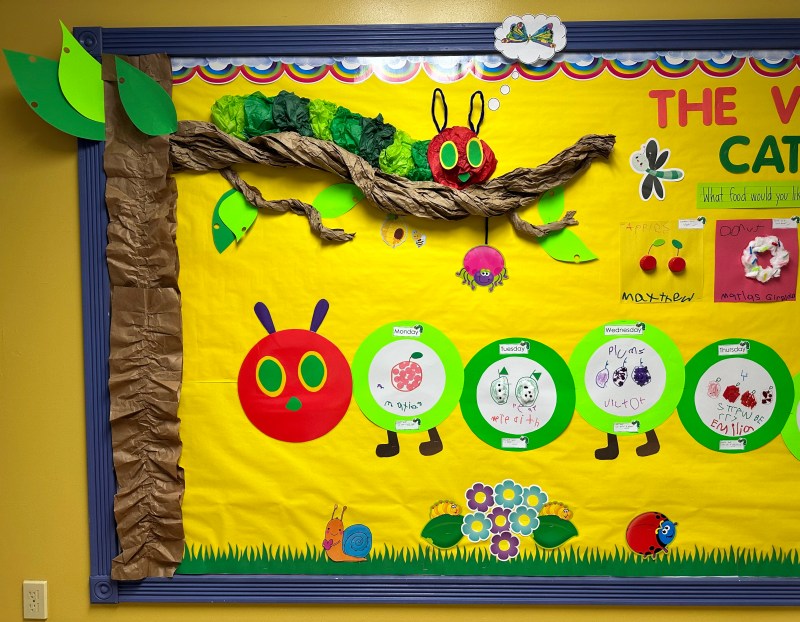
Interactive Story Sequencing
The large caterpillar and student-created food circles helped children retell the story in order while proudly displaying their own artwork. The 3D tree branch added texture and made the bulletin board feel like it came straight from the story.
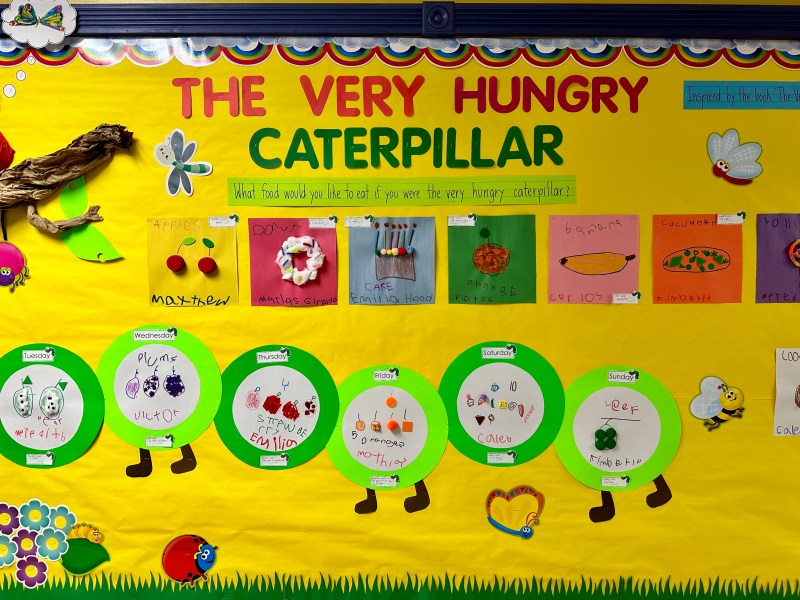
Interactive Writing Prompt
To extend our read-aloud, I asked students:
“What food would you like to eat if you were The Very Hungry Caterpillar?”
Students illustrated and labeled their favorite food, then shared their ideas with the class before adding their work to the bulletin board. This easy activity combines literacy, vocabulary development, drawing, and speaking while creating a colorful classroom display.

Beginning, Middle, and End Story Retelling
Story retelling is one of my favorite ways to check comprehension after a read-aloud. For this activity, students identified the beginning, middle, and end of The Very Hungry Caterpillar before recording their responses on large caterpillar leaves displayed on the bulletin board.
This simple extension strengthened sequencing, comprehension, oral language, and confidence while transforming the bulletin board into an interactive learning display that students revisited throughout the week.
🛒 Supplies to Recreate This Bulletin Board
If you’d like to recreate a similar activity in your classroom, here are a few supplies that work well.
Disclosure: As an Amazon Associate, I earn from qualifying purchases. If you shop through the links below, I may earn a small commission at no additional cost to you. Thank you for supporting my website
Bulletin Board #2: Glad Monster, Sad Monster

After reading Glad Monster, Sad Monster by Ed Emberley and Anne Miranda, my preschool students explored emotions by designing their own unique monsters. Each child selected an emotion, created a colorful monster to match that feeling, and shared their thinking with the class before adding it to our bulletin board.
The finished display became a colorful reminder that all feelings are important and gave students daily opportunities to recognize and talk about emotions.
Skills Practiced
- Identifying emotions
- Social-emotional learning
- Oral language development
- Fine motor skills
- Creative expression
- Describing feelings with vocabulary
Why This Bulletin Board Worked
One of my favorite parts of this display was that every monster looked completely different. Students made creative choices about the eyes, mouths, colors, and facial expressions while explaining why their monster felt happy, sad, surprised, scared, angry, or silly.
Because the bulletin board stayed up for several weeks, students often stopped to find their own monster, compare emotions with classmates, and talk about the different facial expressions they noticed.
Teacher Tip: Create a daily check-in by asking students, “Which monster matches how you’re feeling today?” This simple routine encourages emotional awareness, builds vocabulary, and creates meaningful classroom conversations.
Materials Used
- Colored construction paper
- Googly eyes
- Foam shapes
- Glue
- Markers
- Bulletin board paper
- Border
- Die-cut letters
Book Inspiration
This bulletin board was inspired by Glad Monster, Sad Monster by Ed Emberley and Anne Miranda. The story introduces children to a variety of emotions through playful monster characters and creates wonderful opportunities for classroom discussions about feelings and self-expression.
Daily Feelings Check-In
To extend the lesson beyond the initial craft, I added a daily “How do you feel today?” chart to the bulletin board. Each morning, students moved their name to the emotion that best described how they were feeling.
This simple routine encouraged meaningful conversations, helped students build emotional vocabulary, and made our bulletin board an interactive part of our daily classroom routine rather than just a display.
🛒 Supplies to Recreate This Bulletin Board
If you’d like to recreate this bulletin board in your own Preschool classroom, here are a few of the supplies I recommend.
Disclosure: As an Amazon Associate, I earn from qualifying purchases. If you shop through the links below, I may earn a small commission at no additional cost to you. Thank you for supporting my website
- Glad Monster, Sad Monster
- Foam Monster Craft Kit
- Monster Face Sticker Activity
- Googly Eyes
- Colored Construction Paper
- Bulletin Board Border
- Glue Sticks
Bulletin Board #3: Hot Rod Hamster

Hot Rod Hamster by Cynthia Lord is one of my favorite read-alouds for teaching problem-solving, creativity, and making choices. After reading the story together, my Preschool students completed several hands-on literacy and art activities that came together in one interactive bulletin board.
What You’ll Find in This Bulletin Board
- Story map activity (characters, setting, problem, and solution)
- Paper plate race car craft
- Play dough race car
- STEM activity
- Student writing extension Interactive literacy bulletin board
- Hands-on Pre-K book companion ideas
Why This Bulletin Board Worked
This bulletin board became much more than a classroom decoration. Students revisited it throughout the week to retell the story, compare race cars, discuss their classmates’ creations, and proudly share their own work. By combining literacy, art, STEM, and fine motor activities into one display, the bulletin board remained an engaging part of our classroom long after the initial lesson.
Skills Practiced
- Story comprehension
- Problem & solution
- Characters and setting
- Sequencing
- Oral language
- Fine motor skills
- Creativity
- STEM thinking
Teacher Tip: Invite students to revisit the bulletin board during independent reading or center time. Encourage them to retell the story using the story map, compare race cars, or explain how they built their play dough creations. These simple conversations reinforce comprehension, sequencing, vocabulary, and confidence.
Materials Used
- Bulletin board paper
- Border
- Paper plates
- Construction paper
- Buttons
- Feathers
- Pom-poms
- Play dough
- Glue
- Student artwork
Book Inspiration
This bulletin board was inspired by Hot Rod Hamster by Cynthia Lord, a fun and engaging story that encourages creativity, problem-solving, and making thoughtful choices. Throughout the book, the hamster builds the perfect race car by considering different options with the help of his friends. The story naturally encourages discussion, prediction, and decision-making while keeping young learners excited and engaged.
Story Map Activity
Before creating our bulletin board, we completed a class story map to identify the characters, setting, problem, and solution. This simple literacy activity helped students strengthen their comprehension while practicing important story elements.
Referring back to the story map throughout the week also gave students a visual reminder of the book, making it easier to retell the story independently.
Design Your Own Race Car
After reading the story, each student designed and decorated their own race car using paper plates and a variety of craft materials. Every car was unique, giving students the opportunity to make creative choices while strengthening fine motor skills through cutting, gluing, and decorating.
Once completed, students proudly displayed their race cars on the classroom “racetrack,” turning the bulletin board into a colorful celebration of their creativity.
Build a Play Dough Race Car
Students also used play dough to build their own race cars inspired by the story. Rolling, shaping, and combining pieces helped strengthen fine motor muscles while encouraging creativity and problem-solving. After finishing their creations, students described their race cars and explained the choices they made.
🛒 Supplies to Recreate This Bulletin Board
If you’d like to recreate this bulletin board in your own Preschool classroom, here are a few of the supplies I recommend.
Disclosure: As an Amazon Associate, I earn from qualifying purchases. If you shop through the links below, I may earn a small commission at no additional cost to you. Thank you for supporting my website
- Hot Rod Hamster by Cynthia Lord
- Colored Construction Paper
- Bulletin Board Border
- Glue Sticks
- Paper Plates
- Buttons
- Pom-Poms
- Craft Feathers
- Child Safety Scissors
- Play Dough
Bulletin Board #4: Our Family Portrait

Families are one of the most meaningful topics to explore in a Preschool classroom because every child has a unique story to share. After reading a family-themed picture book together, my students created self-portraits of their families, shared them with the class, and displayed their work on this interactive bulletin board. The display encouraged students to celebrate their families while practicing language, drawing, and early writing skills.
Why This Bulletin Board Worked
This bulletin board quickly became a favorite conversation starter in our classroom. Students loved pointing out their own family portraits, comparing similarities and differences, and talking about the people they love. The display remained meaningful throughout our family unit because children naturally revisited it during the day and continued sharing stories about their families.
Skills Practiced
- Oral language
- Family vocabulary
- Drawing people
- Fine motor skills
- Social-emotional learning
- Early writing
- Listening and speaking
- Comparing and describing
Teacher Tip: Display family portraits at children’s eye level so they can revisit them throughout the day. Encourage students to describe their drawings, introduce family members, and compare what makes every family unique
Materials Used
- Construction paper
- White drawing paper
- Yarn (handles)
- Crayons
- Markers
- Glue
- Bulletin board paper
- Bulletin board border
- Student artwork
Book Inspiration
This bulletin board was inspired by The Family Book by Todd Parr. The colorful illustrations and simple message celebrate all kinds of families and help children understand that every family is unique, special, and loved. The book naturally led to meaningful classroom discussions about the people who make up our families and the different ways families care for one another.
Family Portrait Activity
Each student created a portrait of their family using crayons, markers and different art materials before mounting their artwork on colorful construction paper. Students proudly shared who was in their family, talked about special memories, and explained details in their drawings. Hanging each portrait with yarn or pipe cleaners created the look of framed family pictures and gave the bulletin board a welcoming, home-like feel.
Family Discussions
During our family unit, we created a class anchor chart to organize what we learned about families. Together, students brainstormed ideas about what families have, what families can do together, and what families are. This collaborative activity encouraged rich classroom discussions while reinforcing vocabulary and helping students recognize that every family is different but equally important.
Classroom Community
To reinforce the idea that our classroom is one community made up of many different families, we also created a classroom family tree. This visual reminder helped students understand that although every family looks different, we all belong and contribute to our classroom community.
Student Spotlight
Every family portrait looked different, and that was one of my favorite parts of this activity. Some children included grandparents, siblings, pets, or extended family members, giving us wonderful opportunities to celebrate the many ways families are unique.
🛒 Supplies to Recreate This Bulletin Board
If you’d like to recreate this bulletin board in your own Preschool classroom, here are a few of the supplies I recommend.
Disclosure: As an Amazon Associate, I earn from qualifying purchases. If you shop through the links below, I may earn a small commission at no additional cost to you. Thank you for supporting my website
- The Family Book by Todd Parr
- Colored Construction Paper
- Bulletin Board Border
- Glue Sticks
- Crayons
- Washable Markers
- Pipe Cleaners
Bulletin Board #5: The Tiny Seed

The Tiny Seed by Eric Carle is one of my favorite books for introducing the plant life cycle in a meaningful, hands-on way. Throughout our unit, my Preschool students explored how plants grow through sequencing, science observations, labeling plant parts, and planting their own seeds. Each activity became part of one interactive bulletin board that students revisited throughout the unit.
Skills Practiced
- Plant life cycle
- Story sequencing
- Parts of a plant
- Science observation
- Prediction
- Vocabulary development
- Fine motor skills
- Oral language
- Early writing
Why This Bulletin Board Worked
This bulletin board remained an active part of our classroom learning instead of simply decorating the hallway. Students revisited it to retell the story, identify the parts of a plant, observe how our classroom seeds were growing, and proudly share their own work. Because it combined literacy, science, art, and hands-on observations, it stayed meaningful throughout the entire unit.
Teacher Tip: Keep the bulletin board displayed throughout your plant unit so students can continue making observations and referring back to the story sequence. Revisiting the display helps reinforce science vocabulary while encouraging meaningful classroom conversations.
Materials Used
- Bulletin board paper
- Brown kraft paper
- Construction paper
- Bulletin board border
- Student artwork
- Plant labels
- Seeds
- Soil
- Cups or pots
- Observation journal
- Glue Scissors
Book Inspiration
This bulletin board was inspired by The Tiny Seed by Eric Carle. The story introduces young learners to the life cycle of a seed while exploring seasons, plant growth, and perseverance. It naturally connects literacy and science, making it a wonderful choice for a spring plant unit in Preschool.
Take a Closer Look
These close-up views highlight the different literacy and science activities that came together to create this interactive Preschool bulletin board. Each section gave students another opportunity to revisit the story while reinforcing important science concepts.
Plant Parts Exploration

This large flower became one of our favorite reference tools during our plant unit. Students identified and labeled the different parts of a flowering plant, including the roots, stem, leaves, petals, and seeds. We referred back to this model throughout the week as we learned new vocabulary and discussed how each plant part helps a plant grow.
Story Sequencing

After reading The Tiny Seed by Eric Carle, students illustrated the major events from the story in sequential order. Each student created one part of the book, and together their work became a collaborative retelling displayed on our bulletin board. Revisiting the sequence throughout the week helped strengthen comprehension, oral language, and recall.
Planting Our Beans Investigation

To extend the learning beyond the story, we planted bean seeds and observed their growth over several days. Students predicted what would happen, recorded observations, and compared changes as the plants developed. Displaying photos of the investigation alongside the bulletin board connected our literacy lesson to a real-life science experiment and made the learning even more meaningful.
🛒 Supplies to Recreate This Bulletin Board
If you’d like to recreate this bulletin board in your own Preschool classroom, here are a few of the supplies I recommend.
Disclosure: As an Amazon Associate, I earn from qualifying purchases. If you shop through the links below, I may earn a small commission at no additional cost to you. Thank you for supporting my website
- The Tiny Seed by Eric Carle
- Colored Construction Paper
- Bulletin Board Border
- Glue Sticks
- Child Safety Scissors
Bulletin Board #6: Vegetable Soup

This interactive preschool bulletin board was inspired by Growing Vegetable Soup by Lois Ehlert and combined literacy, art, vocabulary, healthy eating, and early math into one interactive classroom display. As we explored different vegetables through the story, students shared their opinions, created vegetable artwork, and participated in a class survey about healthy foods.
Skills Practiced
- Vocabulary development
- Fine motor skills
- Beginning writing
- Oral language
- Opinion sharing
- Graphing and data collection
- Healthy eating awareness
- Creative expression
Why This Bulletin Board Worked
This bulletin board became much more than a display of student artwork. It encouraged meaningful classroom discussions about vegetables, healthy food choices, and personal preferences while giving students opportunities to read environmental print, revisit their work, and compare class survey results.
Because the activities connected literacy, math, and science, students remained engaged long after the bulletin board was completed.
Teacher Tip: Add an interactive question that students can answer throughout the week. Revisiting the bulletin board during morning meeting or small-group instruction gives children additional opportunities to practice speaking, vocabulary, and counting skills while reinforcing the concepts from the story.
Materials Used
- Green bulletin board paper
- Construction paper
- Tissue paper squares
- Glue sticks
- Student artwork
- Chart paper
- Markers
- Bulletin board border
- Die-cut letters
Book Inspiration
This interactive preschool bulletin board was inspired by Growing Vegetable Soup by Lois Ehlert .The colorful illustrations and simple text introduce young children to vegetables, gardening, and where food comes from while encouraging conversations about healthy eating.
The story naturally lends itself to art, vocabulary, science, and math extensions, making it a wonderful choice for a cross-curricular Preschool unit.
Vegetable Art Activity
After reading the story, students chose a vegetable they would like to add to their own vegetable soup. They illustrated and labeled their vegetable using a variety of art materials before sharing their work with classmates.
This activity strengthened vocabulary, fine motor skills, creativity, and beginning writing while allowing every child to contribute to our classroom display.
Class Opinion Survey
To extend the lesson, we asked students:
“Do you like vegetables?”
Students voted Yes or No, and together we counted the results to create a simple class graph.
This quick extension introduced early data collection, counting, comparing quantities, and discussing class results in a meaningful way.
Classroom Discussion
We also asked students:
“What vegetables would you like in your soup?”
Children shared their ideas with classmates, explained their choices, and practiced using new vocabulary as they described different vegetables.
🛒 Supplies to Recreate This Bulletin Board
If you’d like to recreate this bulletin board in your own Preschool classroom, here are a few of the supplies I recommend.
Disclosure: As an Amazon Associate, I earn from qualifying purchases. If you shop through the links below, I may earn a small commission at no additional cost to you. Thank you for supporting my website
- Growing Vegetable Soup by Lois Ehlert
- Colored Construction Paper
- Bulletin Board Border
- Glue Sticks
- Crayons
- Washable Markers
- Pom-Poms
Bulletin Board #7: When I Grow Up…

This interactive preschool community helpers bulletin board was inspired by When I Grow Up by Al Yankovic and encouraged students to think about their future careers while developing oral language, writing, and drawing skills. After reading the story, students illustrated what they wanted to be when they grow up, shared their ideas with the class, and explored different community helper careers.
Skills Practiced
- Oral language development
- Vocabulary development
- Creative expression
- Fine motor skills
- Beginning writing
- Listening comprehension
- Community helper awareness
- Speaking and presentation skills
Why This Bulletin Board Worked
This interactive bulletin board became an exciting conversation starter throughout our classroom. Students loved looking at their classmates’ career choices, discussing different occupations, and talking about why each job is important.
This is one of my favorite preschool bulletin board ideas because it encourages children to dream about their future while building vocabulary and confidence through meaningful classroom conversations.
Teacher Tip: Invite each student to explain why they chose their future career before adding their work to the bulletin board. Recording their responses on small speech bubbles or sentence strips adds another literacy component and creates a meaningful keepsake for families.
Materials Used
- Pink bulletin board paper
- Construction paper
- Student drawings
- Markers and crayons
- Die-cut letters
- Chart paper
- Printed community helper pictures
- Bulletin board border
- Glue sticks
Book Inspiration
This bulletin board was inspired by When I Grow Up by Al Yankovic. The humorous story encourages children to imagine their future while introducing a variety of careers and reminding them that every job has an important role in the community.
The book naturally leads to conversations about community helpers, personal interests, and future goals.
Future Career Drawing Activity
After reading the story, students answered the question:
“What will you be when you grow up?”
Each student illustrated and labeled their future career before sharing their ideas with classmates. Their artwork became the centerpiece of our bulletin board and celebrated each child’s unique interests and dreams.
Community Helpers Discussion
To extend the lesson, we created a class chart featuring different community helpers, including teachers, doctors, firefighters, police officers, chefs, and mail carriers.
As students shared their career choices, we discussed:
- What each community helper does
- Why their job is important
- How they help others every day
This extension strengthened vocabulary while helping students understand the important roles people play in our communities.
Classroom Conversation
We also asked students questions such as:
- Why did you choose that job?
- How does that person help others?
- What tools would you need for that job?
- Would you like to work indoors or outdoors? Why?
These conversations encouraged students to explain their thinking while building confidence in speaking with their classmates.
🛒 Supplies to Recreate This Bulletin Board
If you’d like to recreate this bulletin board in your own Preschool classroom, here are a few of the supplies I recommend.
Disclosure: As an Amazon Associate, I earn from qualifying purchases. If you shop through the links below, I may earn a small commission at no additional cost to you. Thank you for supporting my website
- When I Grow Up by Al Yankovic
- Colored Construction Paper
- Bulletin Board Border
- Glue Sticks
- Crayons
- Washable Markers
- Chart Paper
Bulletin Board #8: On a Snowy Day

This interactive preschool bulletin board was inspired by The Snowy Day by Ezra Jack Keats and encouraged students to make personal connections with the story through art, discussion, and graphing. After reading the book, students shared their favorite snowy day activities, created winter artwork, and participated in a class survey that became part of our interactive bulletin board.
Skills Practiced
- Reading comprehension
- Oral language development
- Vocabulary development
- Fine motor skills
- Creative expression
- Opinion sharing
- Graphing and data collection
- Winter vocabulary
Why This Bulletin Board Worked
This bulletin board encouraged students to connect the story to their own experiences. As children revisited the display throughout the week, they enjoyed comparing their classmates’ favorite snowy day activities and discussing winter traditions.
The interactive graph gave students another opportunity to practice counting, comparing quantities, and interpreting data while reinforcing the literacy lesson.
Teacher Tip: Choose a discussion question that allows every child to make a personal connection with the story. Questions about favorite activities, foods, or experiences naturally encourage oral language and make the bulletin board more meaningful for students.
Materials Used
- Green bulletin board paper
- White tissue paper (snow)
- Construction paper
- Student artwork
- Cotton balls (snowmen)
- Craft foam pieces
- Glue sticks
- Bulletin board border
- Die-cut letters
- Graph
Book Inspiration
This bulletin board was inspired by The Snowy Day by Ezra Jack Keats. The story celebrates the excitement and wonder of a snowy day while encouraging children to observe, explore, and make personal connections with winter experiences.
Its simple storyline makes it an excellent choice for integrating literacy with art, math, and classroom discussions.
Snowy Day Art Activity
After reading the story, students answered the question:
“What do you like to do on a snowy day?”
Students illustrated their favorite winter activity and shared their ideas with the class before adding their artwork to the bulletin board.
This activity strengthened vocabulary, oral language, creativity, and beginning writing while celebrating each child’s unique experiences.
Favorite Snowy Day Activity Graph
To extend the lesson, students voted for their favorite snowy day activity.
Some of the choices included:
- Sledding
- Building a snowman
- Ice skating
- Making snow angels
- Skiing
Together we counted the votes, compared the results, and discussed which activities were the most popular in our classroom.
This simple graphing activity reinforced early math skills while encouraging meaningful classroom conversations.
Classroom Discussion
We also asked students questions such as:
- Why is that your favorite snowy day activity?
- Who do you like to play with in the snow?
- What do you need to wear when it snows?
- What would happen if you went outside without warm clothes?
These conversations helped students develop vocabulary while making personal connections to the story.
🛒 Supplies to Recreate This Bulletin Board
If you’d like to recreate this bulletin board in your own Preschool classroom, here are a few of the supplies I recommend.
Disclosure: As an Amazon Associate, I earn from qualifying purchases. If you shop through the links below, I may earn a small commission at no additional cost to you. Thank you for supporting my website
- The Snowy Day by Ezra Jack Keats
- Colored Construction Paper
- Bulletin Board Border
- Glue Sticks
- Crayons
- Washable Markers
- Cotton Balls
- White Tissue Paper
Bulletin Board #9: People Who Keep Us Safe (Community Helpers)
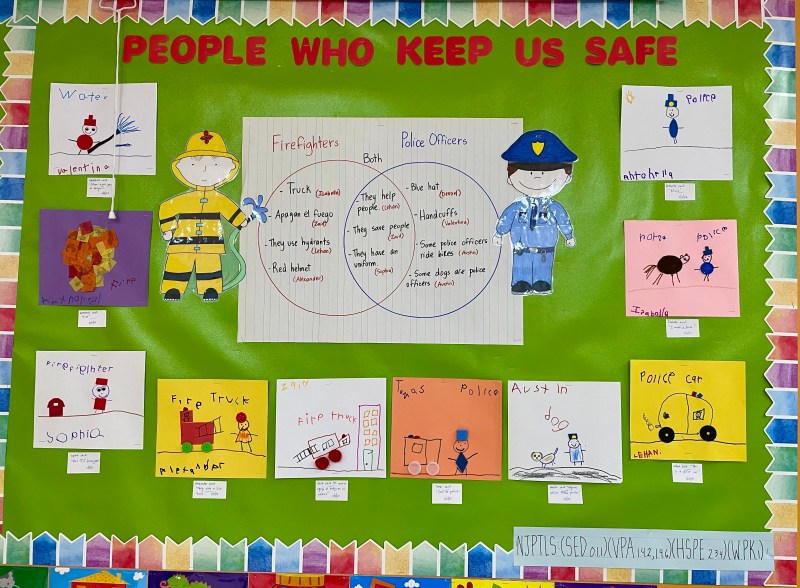
This interactive preschool bulletin board was inspired by our Community Helpers unit and encouraged students to learn about the important people who help keep our neighborhoods safe. After reading books about firefighters and police officers, students created artwork, compared the two professions using a Venn diagram, and discussed the important jobs each community helper performs.
Skills Practiced
- Community helper vocabulary
- Comparing and contrasting
- Reading comprehension
- Oral language development
- Critical thinking
- Fine motor skills
- Creative expression
- Vocabulary development
Why This Bulletin Board Worked
Students loved learning about careers they see in their everyday lives. Creating the Venn diagram together encouraged rich classroom discussions while helping students organize information visually.
The student artwork gave every child an opportunity to apply what they had learned while making the bulletin board colorful and meaningful.
Teacher Tip: Instead of simply teaching community helpers, encourage students to compare different jobs. Asking what is the same and what is different helps develop higher-level thinking skills while naturally introducing compare-and-contrast vocabulary.
Materials Used
- Colored construction paper
- Bulletin board paper
- Bulletin board border
- Die-cut letters
- Student drawings
- Large chart paper
- Markers
- Glue sticks
- Firefighter and police officer visuals
Book Inspiration
This bulletin board was inspired by our Community Helpers unit and books about firefighters and police officers.
Reading informational and fiction books about community helpers gave students background knowledge before completing the comparison activity and creating their artwork.
Firefighters vs. Police Officers Venn Diagram
After learning about both professions, we worked together to compare firefighters and police officers using a class Venn diagram.
Students shared ideas about what made each job unique and what they had in common. Together we discussed topics such as:
- How each helper serves the community
- The tools and vehicles they use
- Their uniforms
- Ways they keep people safe
This collaborative activity strengthened vocabulary, listening skills, and early compare-and-contrast concepts.
Community Helper Art Activity
Students chose either a firefighter or police officer to illustrate. Many included fire trucks, police cars, rescue equipment, or scenes showing how these helpers protect the community.
As students shared their drawings, they practiced speaking in complete sentences and explaining what they had learned.
Classroom Discussion
We explored questions such as:
- Who helps us during an emergency?
- When would you call a firefighter?
- When would you call a police officer?
- How do these helpers keep us safe?
- How are firefighters and police officers alike?
- How are they different?
These conversations helped build vocabulary while encouraging students to think critically about the important roles community helpers play.
🛒 Supplies to Recreate This Bulletin Board
If you’d like to recreate this bulletin board in your own Preschool classroom, here are a few of the supplies I recommend.
Disclosure: As an Amazon Associate, I earn from qualifying purchases. If you shop through the links below, I may earn a small commission at no additional cost to you. Thank you for supporting my website
Bulletin Board #10: Air Transportation for Pre-K

This air transportation bulletin board was inspired by the book Amazing Airplanes by Tony Mitton. Throughout the unit, students explored different types of transportation that travel through the sky while learning new vocabulary and sharing what they already knew about airplanes, helicopters, rockets, and more.
Each child selected an air vehicle to create using a variety of art materials, resulting in a colorful classroom display filled with creativity and imagination.
Skills Practiced
- Air transportation vocabulary
- Science concepts
- Oral language
- Fine motor skills
- Creative expression
- Categorizing
- Listening comprehension
- Writing and labeling
- Speaking and sharing ideas
Why This Bulletin Board Worked
This bulletin board combined informational learning with hands-on art. Students became excited to recognize different flying vehicles and enjoyed explaining how each one travels through the air.
Displaying a variety of student-created transportation crafts helped reinforce vocabulary while encouraging students to observe similarities and differences between different air vehicles.
Teacher Tip: Invite students to brainstorm every type of transportation they know before introducing the book. Creating a class thinking map helps activate prior knowledge and gives students ownership of the lesson before they begin their artwork.
Materials Used
- Construction paper
- Cardstock
- Bulletin board paper
- Bulletin board border
- Pom-poms
- Craft sticks
- Cotton balls
- Feathers
- Tissue paper
- Stickers
- Glue sticks
- Scissors
- Markers and crayons
Book Inspiration
This bulletin board was inspired by Amazing Airplanes by Tony Mitton.
The book introduces young learners to different types of aircraft while building transportation vocabulary. It served as a wonderful introduction before students created their own air transportation projects.
Air Transportation Thinking Map
After reading the story, we created a class thinking map to identify different types of air transportation.
Students helped brainstorm examples such as:
- Airplanes
- Helicopters
- Hot air balloons
- Rockets
- Biplanes
- Zeppelins
This activity encouraged vocabulary development, categorization, and meaningful classroom discussions while preparing students for their art project.
Air Transportation Craft Activity
Students selected their favorite type of air transportation and designed it using a variety of craft materials.
Some children chose cotton balls for clouds, others added feathers, pom-poms, tissue paper, or craft sticks to make each project unique. As students shared their work, they practiced explaining why they chose that particular air vehicle and how it travels.
The finished display showcased each child’s creativity while reinforcing transportation vocabulary.
Classroom Discussion
We explored questions such as:
- Which air transportation would you like to ride?
- Which one flies the highest?
- Which one carries the most people?
- How is a helicopter different from an airplane?
- Which air transportation travels the fastest?
- Where have you seen these vehicles before?
These conversations encouraged students to build vocabulary, make connections to real life, and practice speaking in complete sentences.
🛒 Supplies to Recreate This Bulletin Board
If you’d like to recreate this bulletin board in your own Preschool classroom, here are a few of the supplies I recommend.
Disclosure: As an Amazon Associate, I earn from qualifying purchases. If you shop through the links below, I may earn a small commission at no additional cost to you. Thank you for supporting my website
- Amazing Airplanes by Tony Mitton.
- Colored Construction Paper
- Bulletin Board Border
- Glue Sticks
- Crayons
- Washable Markers
- Chart Paper
- Pom-Poms
- Craft Feathers
- Child Safety Scissors
Pin This for Later
Planning your classroom for the new school year?
📌 Save this post on Pinterest so you’ll have these Interactive Preschool Bulletin Board Ideas ready when you’re planning your classroom for the new school year!
Do you have a favorite bulletin board? Let me know in the comments—I love seeing other teachers’ creative classroom ideas!
More Back-to-School Ideas
Looking for more bulletin board inspiration? Check out my latest post, 4 Back to School Pre-K Bulletin Board Ideas, for four creative bulletin boards perfect for the beginning of the school year.
I hope these preschool bulletin board ideas inspire you to create meaningful displays in your own classroom
About the Author
Hi! I’m Lisy, a first grade teacher and the creator of Ms. Lisy’s Learning Corner. I previously taught preschool, where I created many of the classroom activities and bulletin boards featured on this blog. Today, I continue to share classroom-tested ideas and printable resources for teachers of young learners.
Thanks for stopping by! I hope these preschool bulletin board ideas inspire your next classroom display.
One Response